Written by Jayna Connelly, Science Communicator
 Across the UK, our lands and seas are under unprecedented pressure, with nature expected to deliver more than ever for people, climate and the economy. In response, a growing number of ambitious landscape‑scale projects have emerged — but too often they operate in isolation, without shared methodologies, common learning, or a systems‑based approach. The newly launched Resilient Landscapes and Seas (RLAS) Partnership was created to change that. Bringing together 15 partner organisations (including the GWCT), coordinated by the Ecological Continuity Trust in close association with the British Ecological Society and supported by a private charitable trust, the partnership aims to connect these efforts, strengthen collaboration, and provide the overarching support needed to deliver meaningful, joined‑up change.
The significance of the RLAS Partnership lies in its ambition - to build a cohesive community capable of transforming landscapes and seascapes at scale. By linking practitioners, researchers, land managers, policymakers, and community‑focused organisations, the partnership seeks to accelerate learning, improve consistency across projects, and help ensure that nature recovery is effective, evidence‑based, and resilient in the face of climate change. It represents a major step toward aligning the many initiatives already underway across the UK, enabling them to work together rather than in parallel.
To support this growing community and spark deeper collaboration, the partnership hosted the inaugural RLAS Symposium: Collaborating at scale for nature and people at the Royal Botanic Gardens, Edinburgh on 10–11 February 2026. Over two days, delegates explored the challenges and opportunities of working at landscape scale, heard from leading practitioners and researchers, and shared insights on everything from catchment‑wide restoration to community participation, governance, and funding. The symposium marked the first major gathering held exclusively under the RLAS banner, and an important milestone in building a shared vision for resilient landscapes and seas across the UK.
Big picture themes from the 2025 conference
- Landscape‑scale recovery demands collaboration, partnerships, shared learning, and coordinated action.
- Catchments and connected landscapes are emerging as the most effective scale for action, offering a way to integrate nature, climate, and people.
- Adaptive, “learning by doing” is becoming vital, as climate change makes historical baselines unreliable.
- Meaningful engagement with communities and landowners is essential, not optional.
- Skills, capacity, and funding remain major barriers, requiring new models and stronger coordination.
- A shared vision for resilient landscapes and seas is taking shape, centred on connectivity, partnership, and practical action.
Conference talk summaries
A long‑term view of nature recovery
The conference opened with a keynote from Dr Tony Juniper CBE (Natural England), who took delegates on a 50‑year journey through the evolution of UK conservation, from the 1970s to the present day, and challenged them to think just as boldly about the next 50 years. His message was clear - nature recovery requires long‑term commitment, grounded in evidence but unafraid of ambition.
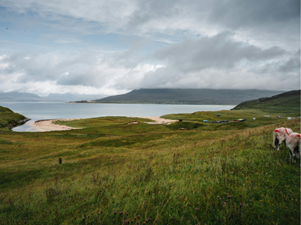 This theme continued with Jessica Findlay (NatureScot), who highlighted the power of working at the catchment scale. Scotland’s emerging network of priority catchments, stretching from source to sea, is demonstrating how climate adaptation, biodiversity recovery, and community resilience can be delivered together when landscapes are treated as interconnected systems rather than isolated sites.
Mike Morecroft (Natural England) reinforced the need for adaptive, evidence‑led practice. With climate change making historical baselines increasingly unreliable, he argued that landscape‑scale projects must “learn by doing”, combining robust monitoring with experimentation to understand what works now and what will continue to work in the future – using examples from the Nature Returns project. He also highlighted the growing challenge of monitoring at landscape scale, noting that while essential, it remains difficult to deliver consistently across large, complex areas.
Delivering change across large landscapes
The second session explored what it truly means to work at scale. Sally Hayns (CIEEM) set out the professional challenges facing the sector, from capacity gaps to shifting policy landscapes, and emphasised the need for skilled, interdisciplinary teams capable of navigating complex ecological and social systems.
Case studies from across the UK and Ireland brought these challenges to life.
- Caroline Sullivan (ACRES Breifne) described how Ireland’s results‑based agri‑environment scheme is coordinating action across almost 3,000 farms. Using scorecards and targeted landscape actions to deliver improvements for water quality, peatlands, and breeding waders.
- Emma Hutchins (Gloucestershire Wildlife Trust) showcased the Severn Treescapes project, a 60‑mile corridor linking ancient woodland cores through new hedgerows, orchards and wood pasture. Demonstrating how habitat creation can support both nature recovery and farm business resilience.
- Vicky Vanderstichele (North Star Transition) introduced the Fens Transition Lab, a multi‑stakeholder initiative structured around five working groups, designed to map barriers, identify solutions, and co‑develop investable interventions capable of transforming one of the UK’s most challenging landscapes.
Collaboration as a catalyst
Partnerships were at the heart of the third session. Rachel Blount (Nattergal) argued that ecological restoration at scale is impossible without collaboration and shared how Nattergal is embedding partnership working into every stage of its projects, from co‑designing solutions with landowners to sharing learning openly across the sector.
Short talks highlighted the diversity of partnership models emerging across the UK:
- The James Hutton Institute’s work with the Ripa Gar Foundation on the 5,600‑ha Glen Lochay Estate.
- The Galloway & Southern Ayrshire UNESCO Biosphere, covering 9,720 km² and uniting communities, researchers, and policymakers behind a shared vision for resilience.
- RSPB’s Cumbria Connect, working with over 50 farmers across 30,000 ha to build trust and create the foundations for long‑term nature recovery.
- The LIFE WADER project, improving 49,000 ha of river, intertidal, and marine habitats across the Tweed catchment and Northumbrian coast.
- Loch Abar Mòr, a partnership stewarding more than 120,000 acres from sea to summit in the West Highlands.
Each example underscored the same message: partnerships unlock opportunities that no single organisation could achieve alone. However, the symposium also highlights that many stakeholder groups, particularly those representing farmers, local communities, and land managers, were under-represented in the room reinforcing the need to broaden participation as the partnership grows.
Participation, not just engagement
 Day two opened with a powerful keynote from Diana Sandon (Dialogue Matters), who reframed community engagement as a matter of governance, justice and power. She argued that meaningful participation, not just engagement, is essential for durable landscape‑scale change. Her distinction between engagement (being heard) and participation (having influence) resonated strongly, particularly for those working with farmer clusters and other collaborative groups where shared decision-making is already embedded.
Talks by Jan Hogarth from SCAMP Landscape Connections, and Ellen Weerman from HAS University of Applied Sciences, and others showed how communities (including young people), farmers and local authorities are shaping projects on the ground, from coastal restoration along the Solway Firth to sponge landscapes in the Netherlands.
Building the conditions for success
After an interactive presentation the barriers presented by language from Rob and Harriet Fraser of Language Matters the final sessions turned to funding and future vision. Will Stephens from 3Keel reported on Landscape Enterprise Networks (LENS), supporting regenerative agriculture through innovative financing. Melissa Swartz and Keith Davie from the Environment Agency covered blended financing from public and private sources, and Henry Leveson-Gower raised concerns on the power dynamic in green finance. The symposium closed with Dr Hannah Rudman (James Hutton Institute), who offered a forward‑looking perspective on how digital tools, data, and collaborative governance can help shape resilient landscapes and seas in the decades ahead.
A final call was made for organisations to share details of their landscape-level projects with the RLAS Partnership. Project of at least 500ha, delivering multiple outcomes for nature, climate and people, are encouraged to come forward so the partnership can build a comprehensive picture of activity across the UK and strengthen opportunities for shared learning. For further reflections on the symposium, read the Natural England blog Collaborating at Scale for Nature and People and the Ecological Continuity Trust’s blog Landscape-Scale Transformation, both of which offer additional perspectives into the discussions and emerging themes.