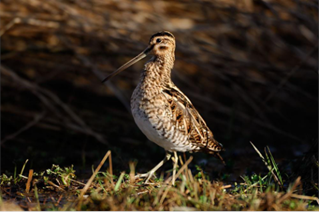
 The not so common snipe?
The common snipe (Gallinago gallinago) has long fascinated ornithologists for its cryptic plumage, zig-zag flight and this haunting “drumming” display. Yet for all its charisma, the snipe’s migration ecology remains surprisingly under-studied compared to other waders. Recent work is beginning to fill that gap offering insights into how these birds navigate vast distances and cope with environmental pressures.
Moulting and migrating at once
For many birds, migration is risky. But for common snipe, this is a particularly perilous time as unlike most birds, young snipe moult almost simultaneously to when they start migrating from Northern Europe.
Both of these processes are incredibly energy intensive so the birds experience sharp rises in metabolic demand and face high energy costs just as they undertake their first major journey. A study examining the plasma biochemistry of young snipe during this period found significantly depleted energy reserves, highlighting the physiological strain of juggling moulting and migration simultaneously. This may explain why weather conditions and access to quality stopover habitat are so critical for their survival.
Migration: timing, weather and energy
Migration onset is shaped by a mix of internal timing mechanisms and external cues, but the balance differs between species. Many studies on wading birds highlight the importance of weather and climate in shaping their migration. However, data on common snipe show this relationship is less clear-cut compared to other wader species.
A recent study comparing Eurasian woodcock and common snipe found that day length (photoperiod) plays a critical role in triggering pre-breeding migration for both species. For woodcock, certain weather conditions, particularly humidity and wind, help fine-tune departure timing in the final days before migration. In contrast, no weather variables were found to influence the migration onset of snipe. The scientists suggest this difference because unlike many waders, snipe face a unique trade-off: They are still completing their moult as migration approaches, meaning they have to choose between favourable weather and completing energetically costly feather replacement. Birds tied strongly to day length may not track changing weather or resource patterns well. This could be making snipe more vulnerable as we face a changing climate.
Although photoperiod appears to set the broad timing of migration, other studies suggest that weather can still influence stopover behaviour, even if it does not trigger the initial departure. A 2023 study of snipe passing through North Ronaldsay, Orkney, showed that migration intensity is much higher in autumn than in spring, and that weather conditions and season strongly influenced the number of birds present at stopover sites. Snipe counts were higher during periods of lower wind speeds, higher temperatures, and increased rainfall. However, individual stopover durations varied widely, and the study did not find a straightforward relationship between weather and how long each bird stayed.
Stopover sites: critical bottlenecks on a long journey
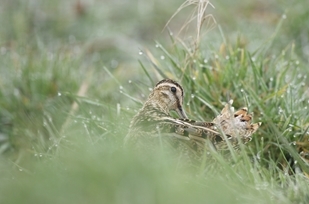 Stopover habitats, which act as essential refuelling stations during migration have also had some emphasis in recent literature. These areas act as bottle necks, crucial in determining migratory snipe survival. Key habitats are largely places that are rich in soft soil and invertebrate prey including bogs, damp grasslands, marshes, wet heaths, fens and irrigated meadows.
Snipe feed mainly on earthworms and cranefly larvae, which are far easier to find in soft, wet soils and flushes. In spring, they also take more aquatic invertebrates, which are most abundant in their preferred habitats of marshy grassland, damp pools and wet flushes. These wetter areas tend to support much higher abundances of their preferred invertebrates than drier moorland, making them far more productive feeding sites for snipe.
Thoughts for the future of snipe
In areas of the UK where habitat is good, there are resident populations of common snipe that stay in the areas all year round. Other papers have highlighted wetland loss and climate change as consistent threats to their numbers.
A paper published in 2021 studied upland rush management in the UK and its impact on breeding waders, including snipe. Researchers found that dense, unmanaged rush encroachment reduces foraging opportunities, but targeted habitat management can improve breeding densities. This highlights how relatively small management actions can make a disproportionate difference to local populations.
Despite being widespread, the common snipe is anything but simple. Its migration is shaped by shifting weather patterns, delicate wetland habitats, and high-energy bottlenecks in its life cycle. For a species so often heard but seldom seen, these new insights provide a deeper understanding into their ecology on a global scale.
But what about our populations of migrant snipe here in the UK? This is where our new project aims to give us a deeper understanding. By tagging common snipe in three locations in Cornwall, Ireland and eastern Scotland and mapping their migration, we hope to find out where our overwintering snipe come from so we can target our international collaborative efforts to boost populations of this iconic species.
Support the snipe appeal
You can play a role in helping to reveal the secrets of the snipe. In the run up to Christmas the GWCT is running a Snipe Appeal to raise funds for this vital project. By contributing, you could help fund the technology and expertise needed to reveal the hidden life of the common snipe and ensure they remain part of our wild world for generations to come.
Photo credit: Laurie Campbell